
4 Things to Look For When Inspecting an Antique Frame
Antique frames, with their intricate designs, evoke time past when craftsmanship was fine art unto itself. Much like fine wines, the passage of time adds character to and increases the value of antique frames. In some cases, an antique frame may be worth more than the art it surrounds.
Antique frames have been reproduced by many contemporary frame makers throughout the world. So how can you tell if a frame is an antique or an antique reproduction? Look for these four things to help you inspect and classify your antique frame:
1. Look at the Back
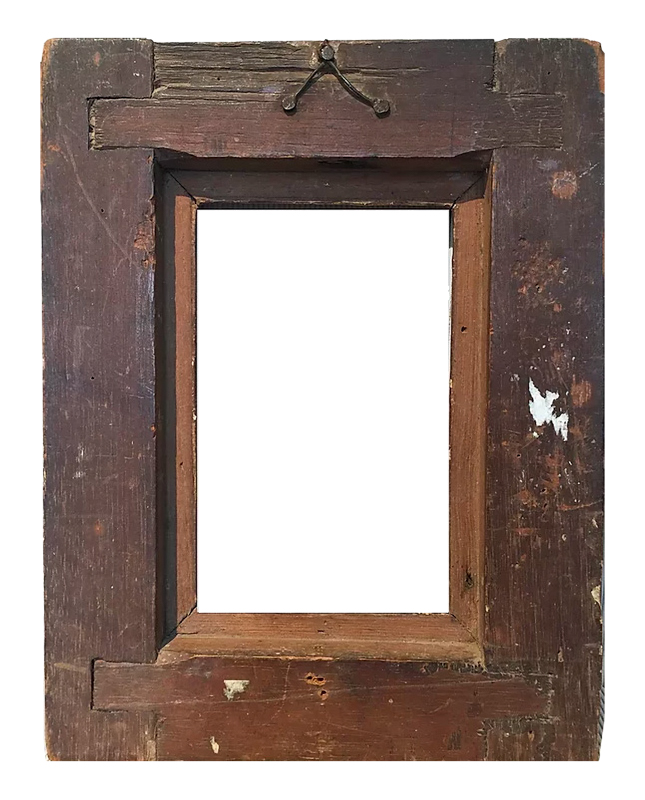
Turn the frame to its back, or verso, and observe it carefully. If it is warped, fit with old hardware, or has wormholes, then it is probably old. Most picture framers do not duplicate warping or wormholes on the back of a new frame even if they distress its front to look old.
2. Identify the Material
Is the frame made of plaster or is it a wood frame? Plaster or composition frames became popular in the early 19th century. Therefore, if a frame is made of plaster rather than carved wood, then it is probably not older than the 19th century, even if its design seems to belong to an earlier period. For example, a Louis XV antique frame constructed of plaster, or compo, could not have been made in the 18th century.
3. Search for Gilding Lines
You may think that a gilded frame must be a valuable antique. Think again. Does the frame’s lovely patina originate from real gold or less precious metal? Not every gold finish is the real thing. What you see might be a bronze paint finish, which is often used on its own or to camouflage damaged gilding. Bronze paint is applied thickly, so you can usually detect it by its visible brushstrokes and, in time, it discolors to a dull brown. Another inexpensive substitute for gold is a metal leaf, which you can spot rather easily due to its orange hue.
Real gold leaf, by contrast, does not tarnish with age, has an unmistakable sheen, and is applied by hand using small, 22-karat sheets over gesso and bole. Sometimes the sheets create faint lines on the frame where they overlap. These gilding lines may be a hallmark of a valuable frame.
4. Look for a Classic Shape
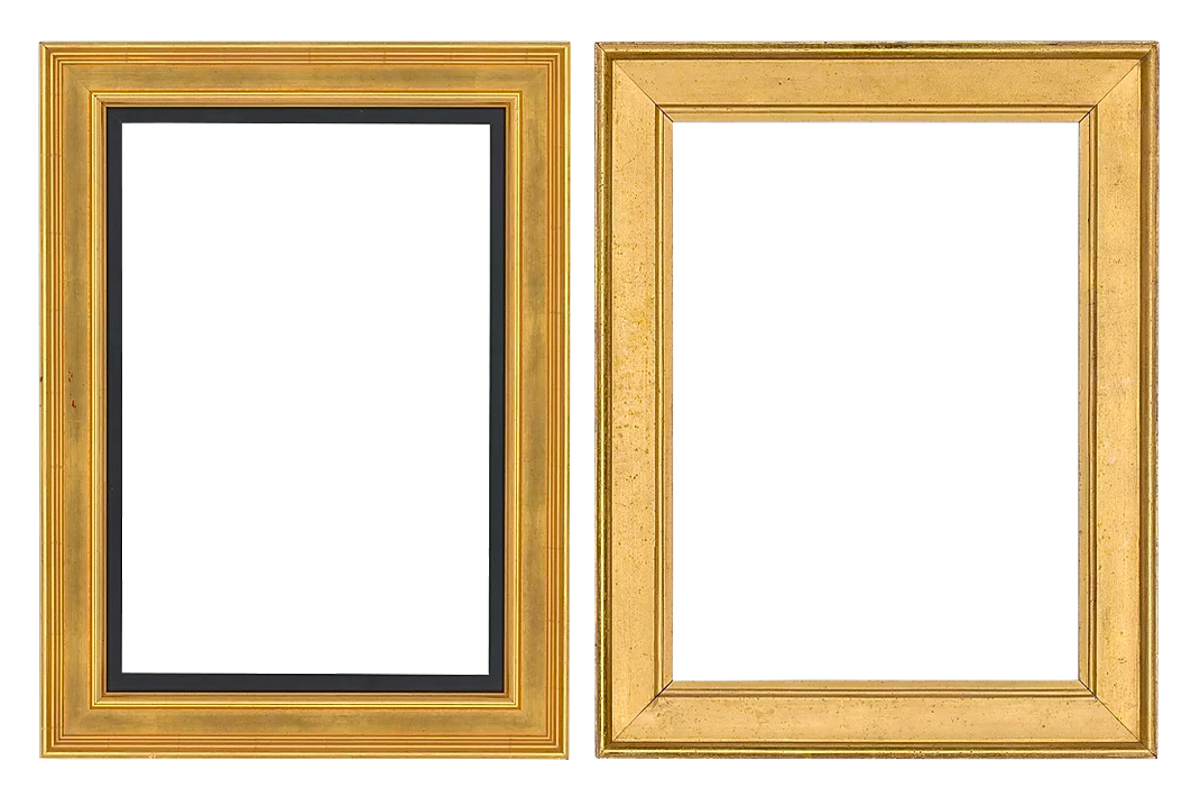
While the frame’s style and design can be a good start in determining its age, it’s important to note that many classic frame shapes were made over centuries of time and many of these classic designs were reproduced. It’s important to exercise caution when trying to determine if a frame is antique or an antique reproduction using shape alone.
For example, ancient churches featured tabernacle frames, but not every tabernacle frame is antique. In the 19th century, for instance, American architect Stanford White created his own interpretation of that classic frame design. Similarly, the Italian cassetta frame was introduced in the 13th century, but versions of it continued to be made through the 19th and 20th centuries.