
What is Gesso?
If you have a gilt-framed artwork, then most-likely underneath the gold leaf or silver leaf of the frame is a layer of gesso. So what exactly is gesso and how should gessoed frames be cared for?
Gesso, meaning chalk in Italian, is a thick, white, paint-like substance that provides a uniformly smooth surface over wood moldings onto which gold and silver leaf is applied. Throughout history, gesso has been used as the traditional ground, or preparation, for gilding frames.
Gesso is typically made from a solution of calcium carbonate or calcium sulfate, water, rabbit-skin glue, and sometimes linseed oil. These ingredients are carefully mixed and then heated at a low temperature in a double boiler. Before the application of gesso, the frame must first be coated with a pigment primer of rabbit-skin glue to ensure optimal bonding of the gesso.
Don’t Artists Use Gesso?
Artists have long used gesso as a primer for paintings. The use of gesso in paintings dates as far back as ancient Egypt and became common in Medieval and Renaissance panel paintings. This gesso, however, is not the same as the gesso used for gilding frames. The gesso artists use contains less glue to facilitate the adhesion of the paint and to allow for more flexibility when applied to a canvas support.
Starting in the 20th century, artists began using acrylic gesso instead of the traditional rabbit-skin glue composition that is still used for gilding because its ingredients allow for even greater flexibility on canvases and other non-wood surfaces, making them less susceptible to cracking.
How is Gesso Applied?
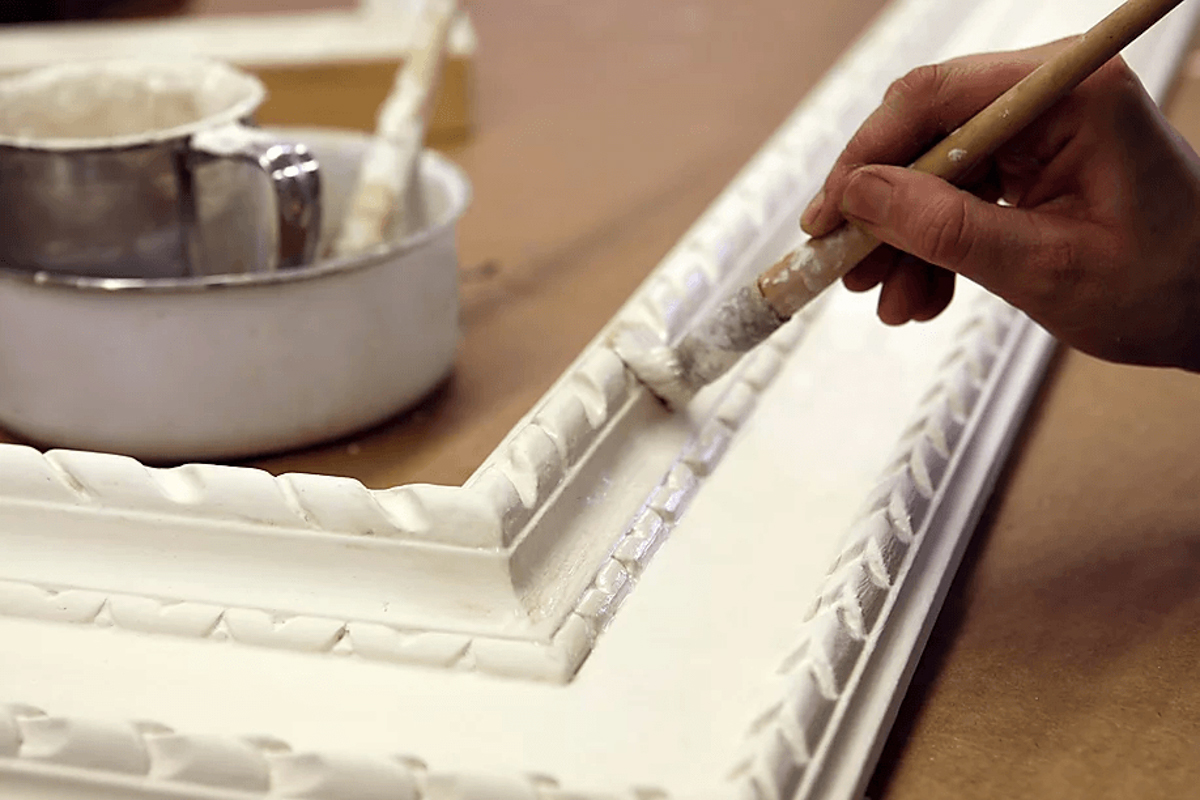
Gesso is typically brushed on by hand over the frame’s entire wood surface. Eight to ten coats of gesso are typically required to achieve a strong, shell-like coating.
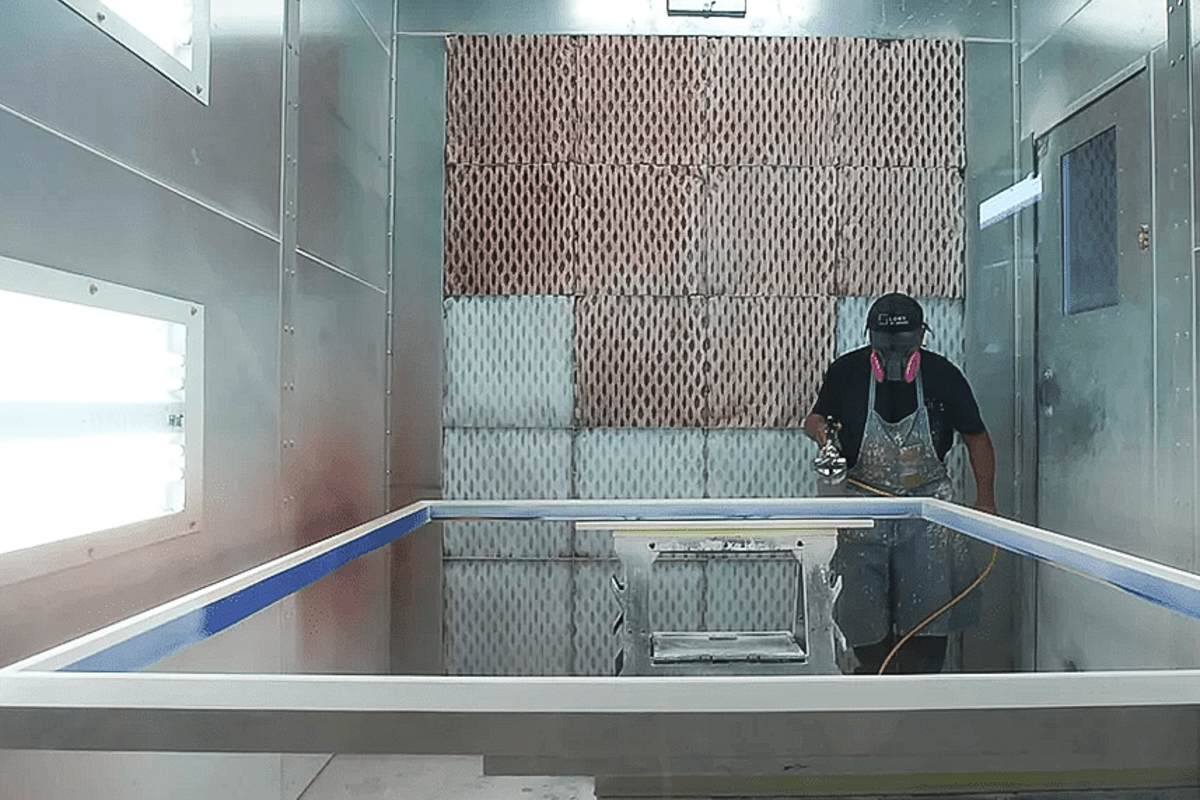
For more modern frames, gesso is sprayed in a spray booth to create a more uniform surface needed on a slick modern frame.
Working with Applied Gesso
After the gesso coating has dried it is surfaced by hand using either a wet brush or linen cloth, or dry or wet sandpaper. The great thing about gesso is that you can apply it to nearly any surface, and then paint over that surface with acrylic paint, oil paint and add varnish later.
A frame’s carved details can be lost when gesso is applied, so it is often necessary to carve back the gesso layer with small tools to redefine or augment the ornamentation. This technique is known as recutting or tooling. Perfected by the French, recutting was used on frames with finely carved surfaces dating to the 18th century and earlier.
Early frame makers occasionally added decoration to the gesso, which often took the form of cross-hatching or punch-work. Another ornamentation technique that incorporates gesso is pastiglia. The pastiglia technique was especially popular during the Italian Renaissance when frame makers applied liquid gesso in layers to create low-relief decoration. Conservators and frame makers continuing using these techniques today when restoring period frames as well as creating antique reproduction frames and contemporary frames.
4 Tips to Care for Gessoed Frames
Gesso is highly sensitive to environmental changes. It will shrink, flake, or crack if exposed to cycles of excessive heat, cold, humidity, or dryness. Follow these tips for proper care of your gilt frames:
1. Store in a stable environment
Store your gilt-framed artwork in a stable environment with as few fluctuations in relative humidity and temperature as possible. Avoid storing gilded frames in places like a damp basement or hot attic.
2. Monitor on a regular basis
Check antique gilded surfaces regularly for cupping or cracking on the surface.
3. Get Professional Cleaning
NEVER use a moist cloth to clean an antique gilded frame and avoid do-it-yourself cleaning advice. Even gentle use of a soft dry cloth can cause damage to fragile surfaces. When it’s time to clean your gilt-framed art, have it professionally cleaned by an art conservator with many decades of experience cleaning and restoring gessoed frames.
4. Fine Art Handling
Moving a gilt-framed artwork can damage the gesso layer. Seek professional assistance from fine art service providers who have the necessary skills and experience to safely pack, crate, transport, and install diverse artworks.