
Tragic Fire Inspires Collector, Leads to Startling Discovery
Second generation Lowy owner Larry Shar grew up surrounded by the kind of art most people only see in museums created by Old Masters, Impressionists, maverick Modernists, and cutting edge contemporaries. Works produced by the greatest artists of all time came to the Lowy atelier for restoration, to be matched to the perfect frame or both.
It was not unusual for young Shar to walk up New York City’s Madison Avenue, en route to the home of an important collector, with a Matisse tucked under his arm. When Shar started building his own art collection, he was drawn to a little sketch of a young boy painted by Walter MacEwen, a once-celebrated nineteenth century American ex-patriate artist whose reputation had dimmed with time.
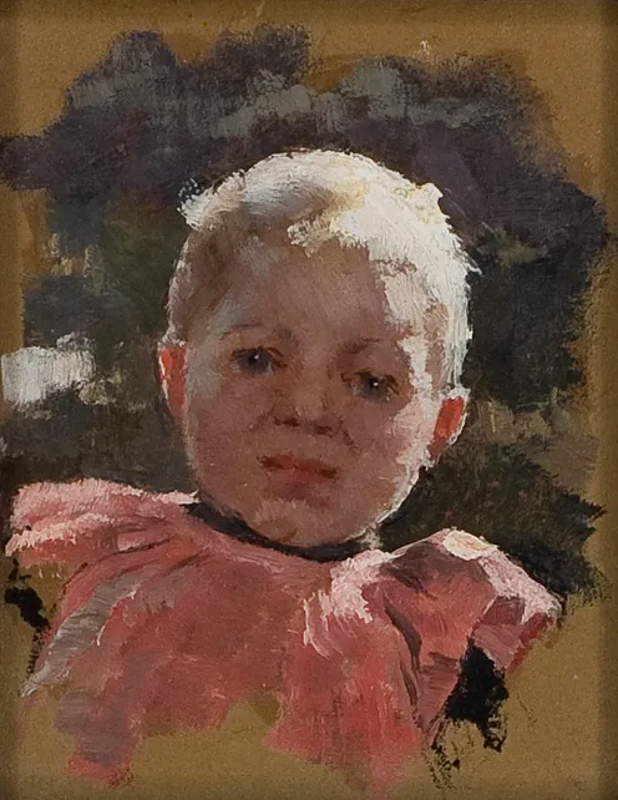
“As a Brooklyn-born American, who became an art student, then an art restorer/art framer and finally an art collector, I have always been attracted to American painters working abroad to hone their talents and translate them to a particular American idiom. One such artist is Walter MacEwen, whose work I was first introduced to in the 1970’s,” recalls Shar.
American Painter Walter MacEwen
Walter MacEwen was born in 1858, one of five children in a prosperous Chicago family. When he was nineteen, he followed in the footsteps of many artistically-inclined young gentleman of the period by moving to Europe to pursue his dream of becoming a painter.
His education began in Munich, but, like his contemporary, John Singer Sargent, he was fascinated by the works of Frans Hals, one of the emblematic painters of the Dutch Golden Age. So he started spending time in Holland.
MacEwen Goes to Holland
Everything Dutch appealed to MacEwen; the light, the landscape, and especially the people – peasants, laborers, children, old wives, young lovers. For years, he concentrated on painting naturalistic scenes of ordinary people going about the business of life.
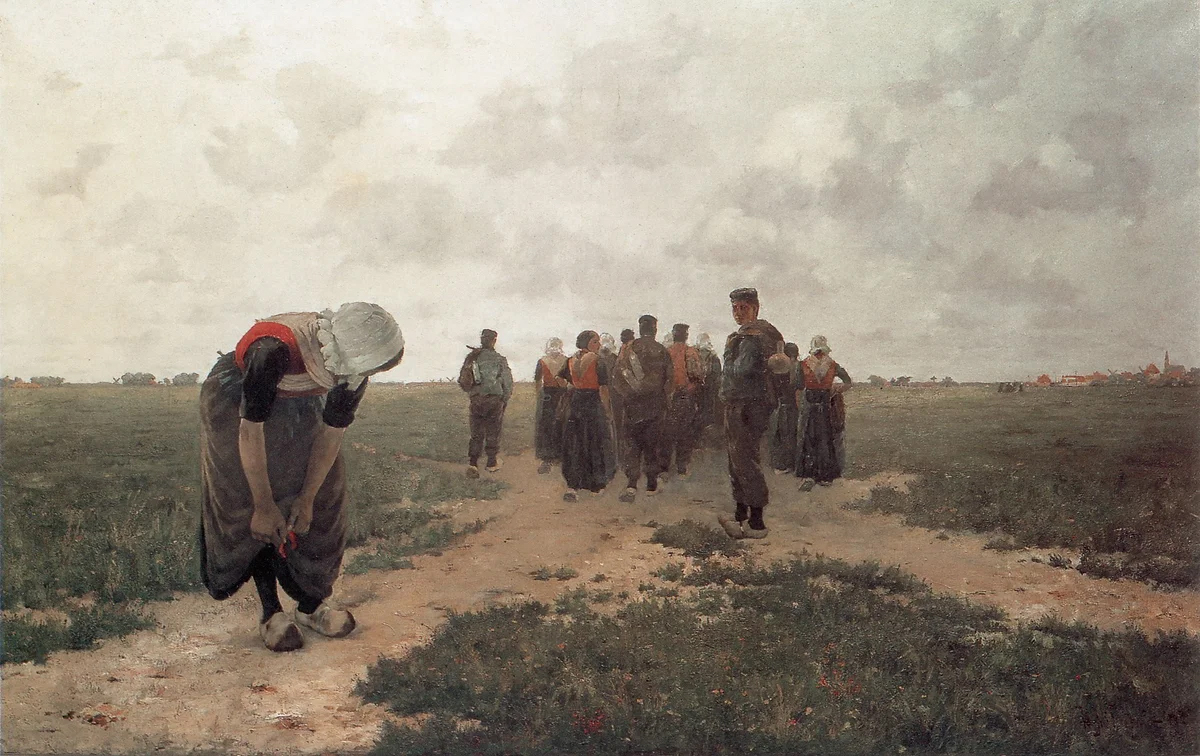
MacEwen’s artful paintings of quintessential Dutch scenes appealed to critics and collectors back in America. They appreciated his ability to find beauty everywhere and to tell a story about the seemingly simpler times that preceded the Industrial Revolution.
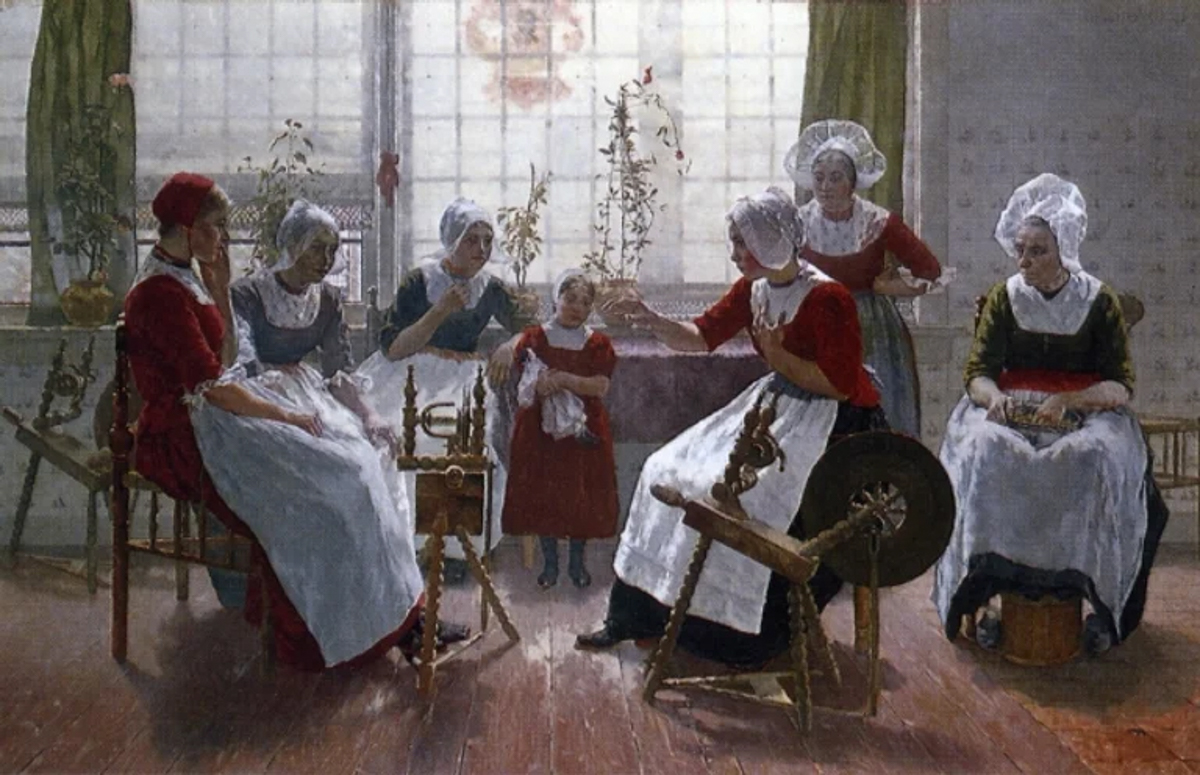
MacEwen won prizes in America and Silver and Gold medals throughout Europe, building an international reputation and a celebrated body of work. Museums at home and abroad added his works to their permanent collections.
MacEwen’s Star Fades
But MacEwen’s name lost some of its luster after the First World War, when tastes changed and collectors turned their attention to artists who were looking ahead to the future instead of romanticizing the past. By 1935, MacEwen stopped painting and focused on print-making. He died in 1943, leaving many of his paintings with family members, including his nephew, Alfred Robinson MacEwen, who owned a beautiful house in an idyllic country setting in rural Vermont.
Fire Destroys Private MacEwen Collection
In January, 1958, Alfred MacEwen, his wife, and their two dogs visited their remote country retreat to settle in for a cozy winter weekend. In the evening, area residents noticed a strange orange light illuminating the night sky.
Firefighters identified the source of the strange light to a fierce blaze at the MacEwen’s house. They struggled to plow through a long road impeded by snowbanks to reach the inferno. By the time they arrived, all was lost. Sadly the MacEwen’s and their pets perished in the flames. The tragedy was so haunting that, years later, one firefighter’s daughter was moved to write a poem about it.
Along with the tragic loss of life, the house was reduced to rubble, burning so hot that it melted the family’s Chrysler. Many of Walter MacEwen’s paintings were destroyed.
MacEwen’s Great-Great Nephew
Although it happened before he was born, the fire made a deep impression on Alfred McEwen’s grandson, Robert Ludlum. He was fascinated by family folklore. Growing up, Robert heard stories about his Great-Great Uncle Walter whose paintings hung in his father’s house.
A number of paintings also hung in the palatial home of his Great-Great Aunt Laura’s Connecticut estate which was an exact replica of the Petit Trianon in France. Ludlum felt a bond with his ancestor. He shared his love of art and, although he grew up to be a banker, his private passion was painting.
When one of Ludlum’s jobs prompted him to move to Holland for a period of fifteen years, he used the time to follow in his Great-Great Uncle’s’ footsteps. He visited villages such as Egmond aan Zee to explore the landscapes and polders that were familiar sights in MacEwen’s paintings.
Back in New York, Ludlum created his own paintings in his downtown studio until, in a somewhat ironic twist of fate, his canvases were ruined by the rising waters of Hurricane Sandy.
MacEwen’s Painting The Chaperone
It was always Ludlum’s dream to have a MacEwen of his own. That dream came true when he acquired Walter MacEwen’s The Chaperone. In the painting, a young man sits at a table, smoking a long pipe, while seemingly courting a shy young woman. Nearby, an older woman keeps watch over them, even as she works industriously on a long lace panel.
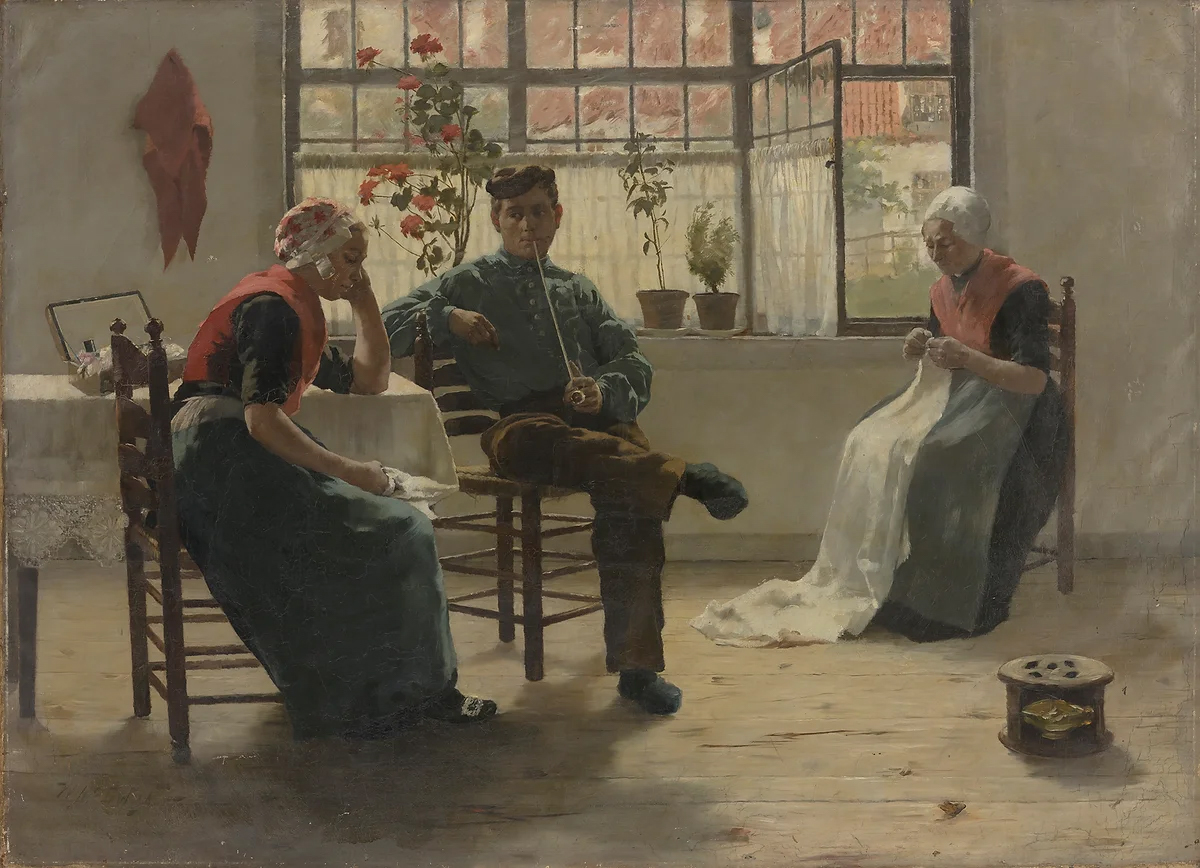
The light behind the figures filters into the room through a paned window, which is draped in soft, gauzy curtains. A classic image of Dutch domesticity, the painting invites the eye into an orderly world, where everything is in its place.
Recognizing that his prize possession was showing mild signs of age, Ludlum brought the painting to Lowy for cleaning, restoration and conservation. Larry Shar, still a MacEwen aficionado, welcomed the opportunity to restore The Chaperone to its full beauty.
Lowy’s Restoration of The Chaperone
Lowy conservator Sebastian Dereibus was not familiar with MacEwen’s work, but after carefully and methodically removing a layer of yellowed and discolored resin varnish from the painting, he was struck by the artist’s deft use of light.
“The transformation was literally luminous,” he says. “It went from being a drab monotone genre scene into a bright crisp winter interior, and the quintessential Dutch silver light came into full view.”
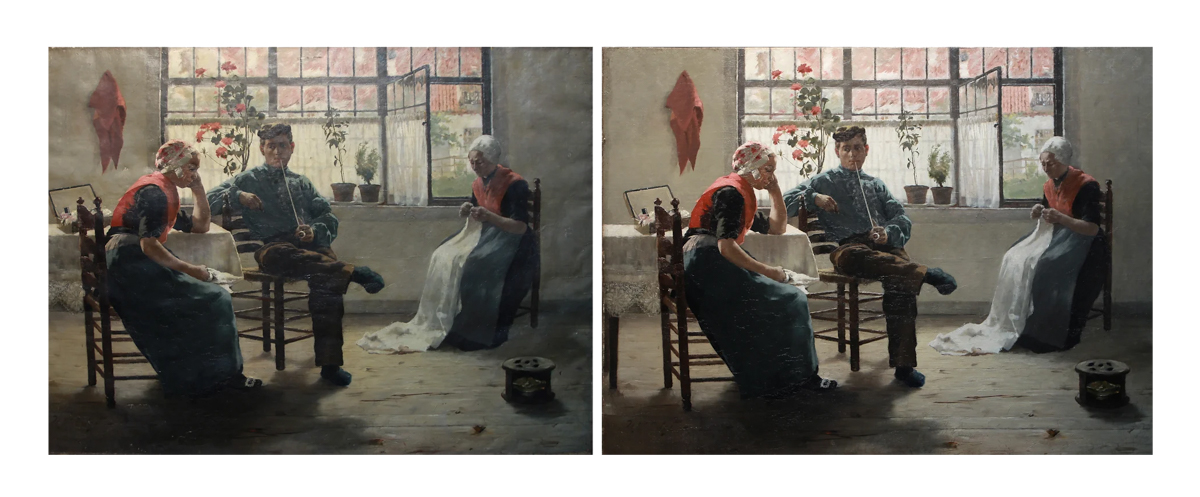
Restoration Reveals Centuries Old Secret
The Chaperone’s visual splendor was not its only revelation. Lowy’s Adam Sperling set out to do some structural work on the painting. As he started to separate the canvas from what he first thought was an old lining, Sperling found a second canvas hiding right underneath!
“I generally work with the paintings face down, so there was a dramatic reveal as I first lifted the stretcher up with only the backing canvas to reveal the hidden painting for the first time,” says Sperling.
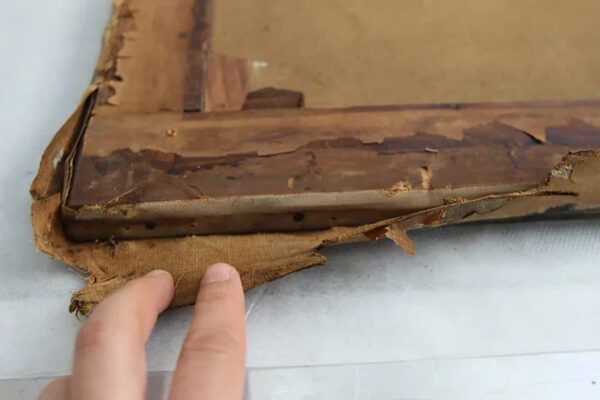
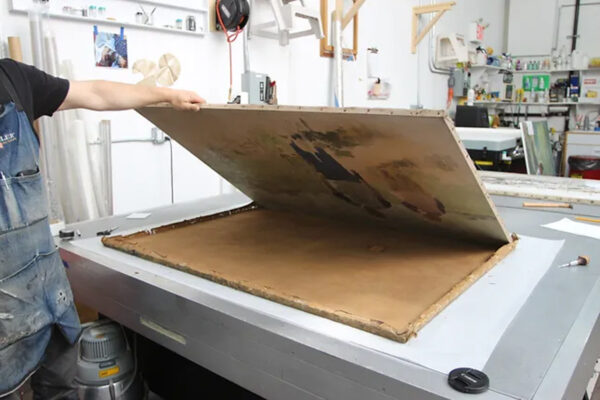
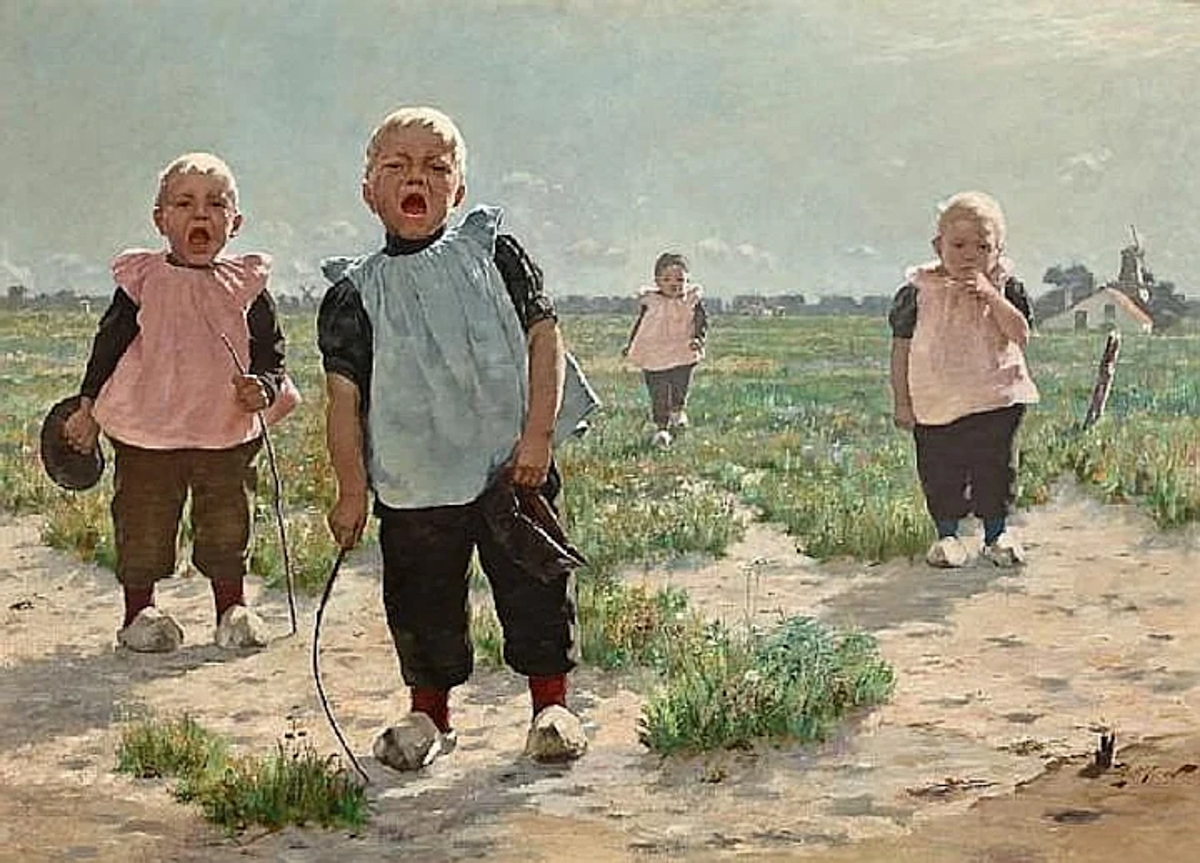
MacEwen had placed what appears to be a study for Eh! Eh! Les autres, allons jouer! En Hollande, the artist’s celebration of childhood, underneath The Chaperone, where it had remained hidden for over a century.
Sperling describes the discovery as being “Very cool. I really like MacEwen’s work and it is always interesting to see a window into the process of such a polished artist.”
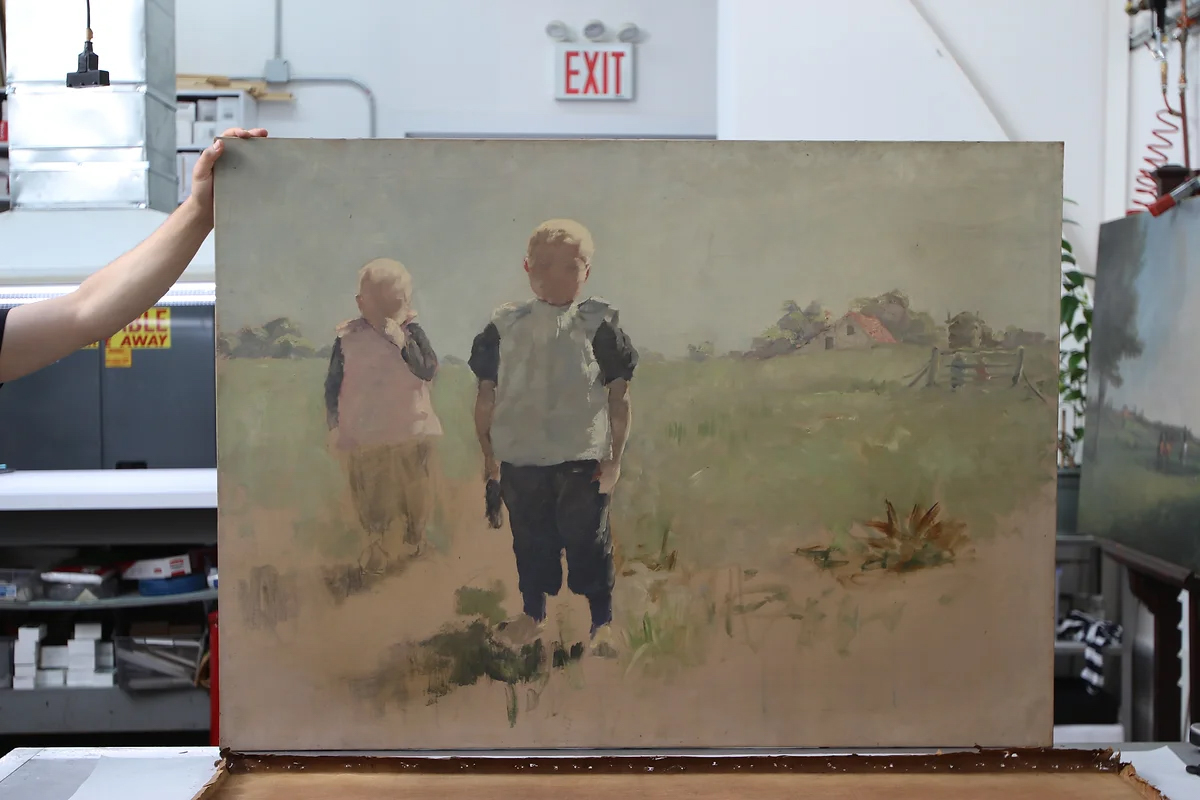
The secret MacEwen painting will be restored and hung in a prominent spot in Ludlum’s home. It will serve as a beautiful tribute to his family’s history and connection to timeless art.
“It’s such a good feeling to still have this painting in the family, and just amazing to see it restored to its original glory in the hands of experts,” he says.
Possible Eh! Eh! Les autres, allons jouer! En Hollande Study
Larry Shar’s little MacEwen sketch he purchased in the 1970’s, reveals a possible connection to Ludlum’s newly discovered MacEwen painting. The little boy depicted in Shar’s painting resembles one of the children in the recently-discovered painting hidden beneath The Chaperone. It may be a study for Eh! Eh! Les autres, allons jouer! En Hollande or Kite Flying, another MacEwen painting.
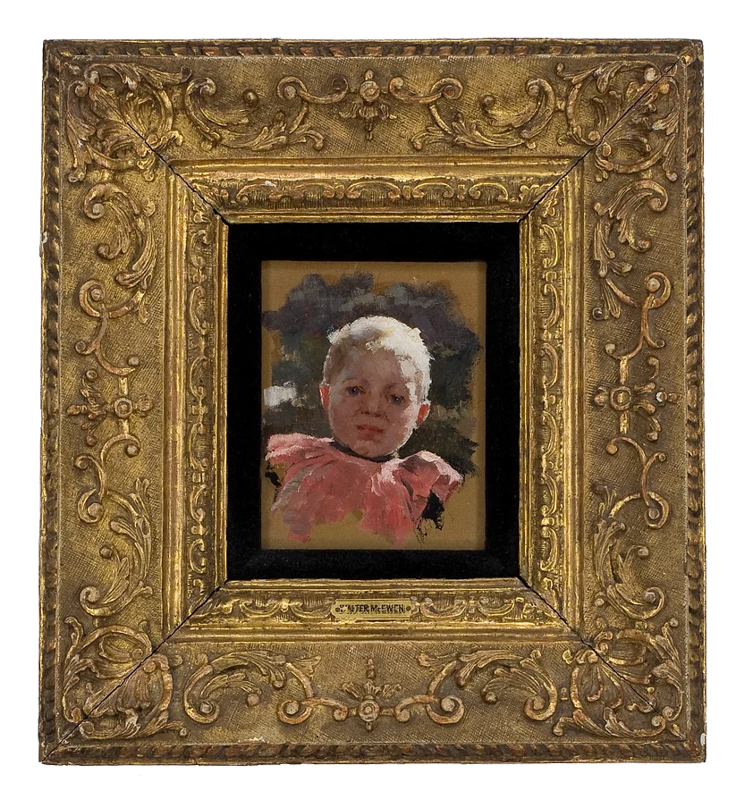
Shar recalls that “At the time, I couldn’t afford a monumental painting like the one we just restored for MacEwen’s descendant, but I did have a magnificent 17th century Dutch frame in Lowy’s inventory.
I decided to give MacEwen the recognition he deserves by using it to frame this little sketch and turning it into my own Rembrandt! I enjoy living with it to this day.”
Have a Rembrandt of your own that needs some conservation? Check out our painting conservation services or contact us.