
Glazing Protects Works on Paper
Works of art on paper such as watercolor paintings, prints, drawings, and photographs, are fragile. Unlike canvas or panel paintings, works on paper need coverings to protect them from dust, dirt, creases, sunlight, water damage, and other hazards. In most cases, glazing is the recommended solution for ensuring the health of vulnerable works on paper.
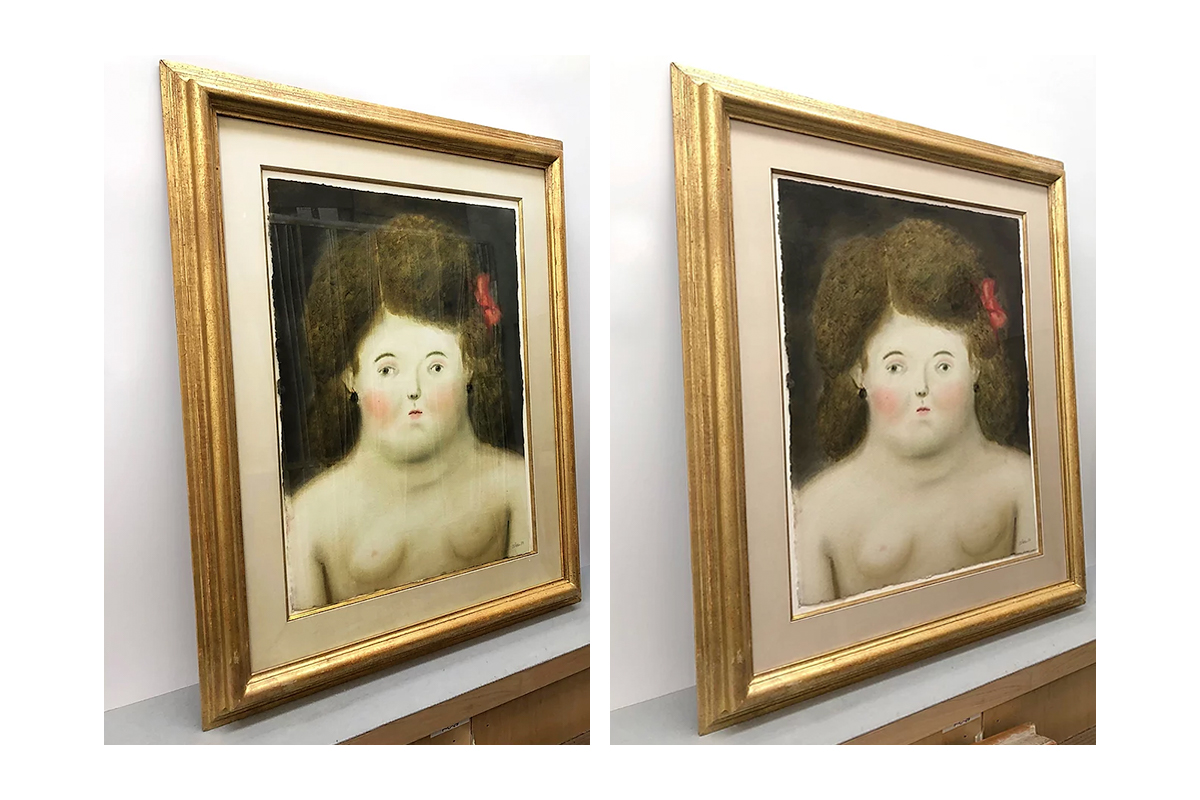
5 Glazing Considerations For Works on Paper
Here are five things to look for when you assess the glazing for your work on paper.
1. Glass or Plastic?
Glass
Glass has been used to protect works on paper since the 17th century. Ordinary glass is relatively durable and inexpensive, but it is breakable and causes reflection and glare problems. Tempered glass, while much stronger, is expensive, often too heavy for glazing purposes, and its thickness tends to cause a color cast. Glass is not your only glazing choice, though.
Plastic
Since the 1970s, plastics have been used as a glazing alternative. Acrylic (e.g. Plexiglass®) is the most commonly known material and is considered superior to polystyrene and polycarbonate, which are also available under multiple brand names. Acrylic is lighter than glass and is shatterproof, so it can be a good glazing solution for works that are large and/or handled often, and that do not contain any loose mediums.
On the other hand, acrylic scratches easily. Moreover, the high electrostatic tension of acrylic can draw loose particles from a charcoal or pastel off its layer and onto the plastic. As a result, elements of the artwork can be lost. Finally, large acrylic sheets are sensitive to temperature fluctuations that can make glazing surfaces flex and bend which could come in direct contact with the artworks.
2. Ultraviolet Protection
Protection from ultraviolet light is a crucial consideration in selecting a glazing product. With UV protective glazing you can display works on paper where lighting is not filtered. UV protection is not an inherent feature of ordinary glass or plastic, so be sure to choose a glazing product that is UV filtering or absorbing. Remember to check the glazing of your work on paper periodically, because its UV protection may deteriorate with time.
3. Clarity
Glazing products can often cause a visible color cast and might have a tinge that diminishes clarity. Some UV protective films and products also add a slight tint. It is therefore recommended to select colorless glass or relatively colorless acrylic resistant to yellowing.
4. Reflectivity
Reflection and glare often affect the viewing of artworks that are covered by glazing surfaces. Proper lighting can help alleviate these issues, but reflection control glass may be desirable as well, especially if the artwork’s composition has large dark areas. Note that reflection control is different from the more common (and less expensive) non-glare glass, which is etched and does not provide absolute clarity.
5. Resistance
How resistant is the glazing to accidents? And when it is damaged, how does it crack or break? No glazing surface is breakage-proof, and both glass and acrylic may break in an unsafe manner under certain conditions. Usually, however, in case of impact your work on paper would fare better with glazing than without it. Also, note that proper framing reduces the threat of glazing breakage considerably.