
SIZE
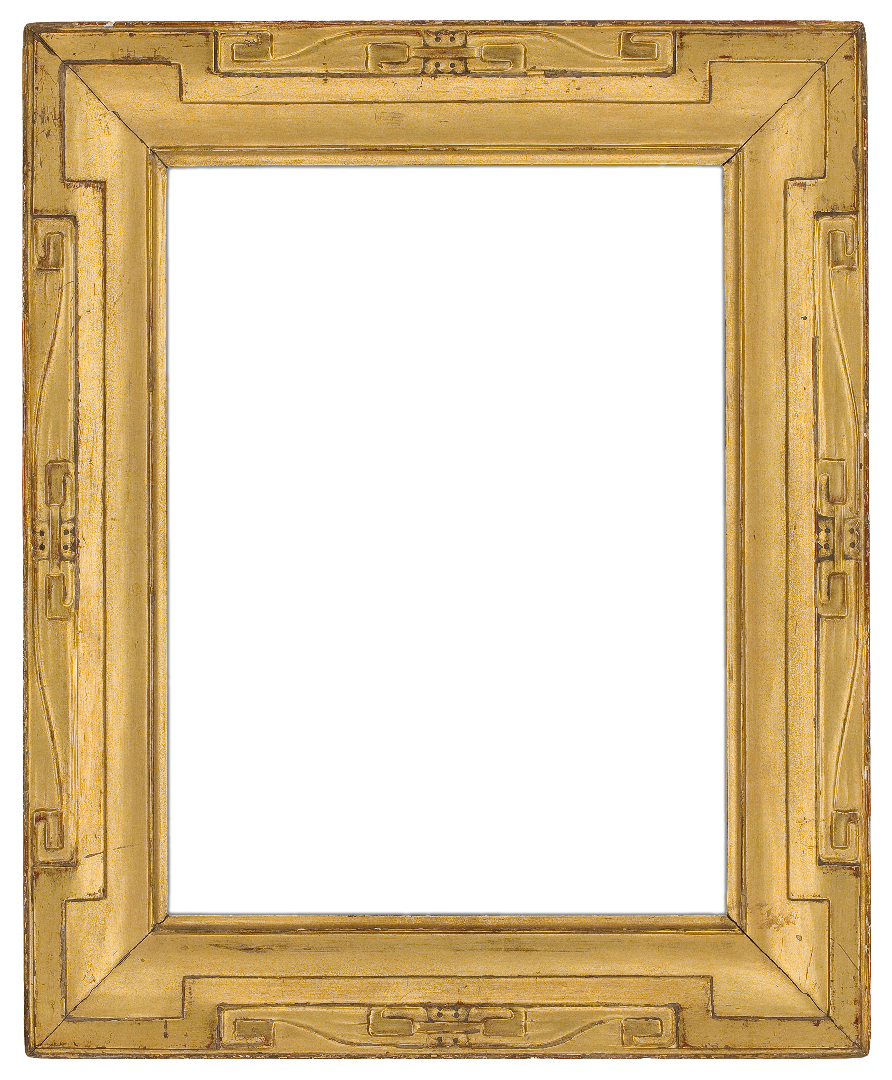
Frame Width: 2.75
Sight Height: 15.5
Sight Width: 11.5
DETAILS
Century: 20th Century
Country: American
ABOUT
American frames were greatly influenced by English and French styles in the 18th and 19th centuries. Although frames were frequently mass produced in the 19th century and gilt ornamentation was usually cast in plaster or ‘compo’ instead of hand-carved, many beautiful designs originated from this time in America. The Hudson River School frames and the frames designed by Stanford White are exquisite examples. In the early 20th century, American frame makers of the Arts and Crafts movement returned to the art and tradition of their craft by hand-carving, gilding, and signing their frames. The firms of Carrig-Rohane and Newcomb-Macklin as well as frame makers in Taos and Bucks County created some of the most beautiful American frame designs of this movement.
Taos – The artists of Taos, New Mexico in the early 20th century were inspired by their European and American East Coast heritage and Native American influences. The frames that they used resemble other early 20th century gilded Arts and Crafts designs, but were ornamented with Native American motifs and were more rough hewn. These southwestern frames became popular and were made by several frame makers including the Newcomb-Macklin Company and the J.H. Miller Company. The artists Couse and Sharp are known to have designed their own frames.
LOWY VIRTUAL FRAMING
Curious to see how your art could look hanging on a wall in a Lowy frame? Using Lowy's Virtual Framing Tool, you can see what your painting could look like in different frames and even how it could look hanging on your wall.
Lowy's Virtual Framing Tool guides you through the simple process. All you'll need to get started is a JPG photo of the unframed artwork, the artwork's dimensions and a photo of your wall.
ARTWORK PHOTO
ARTWORK DIMENSIONS
WALL PHOTO
REQUEST QUOTE
Is there a piece in your collection that you know would look so much better in a new frame? Do you have a large collection of art that needs all new frames but don’t know where to start? Are you searching for a creative solution to display a family heirloom but need some help? Lowy has you covered.
TRUSTED BY